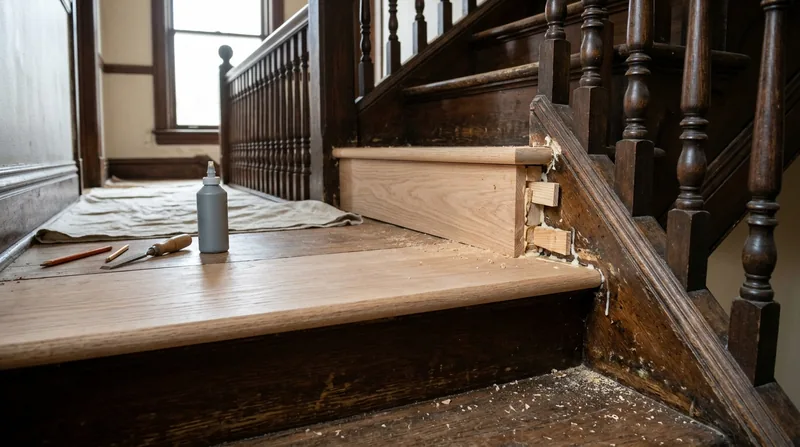




Joliet's Victorian front porches, basement stairs, and attic access ladders see hard use year-round, and the city's freeze-thaw cycles, spring floods, and humid summers accelerate wood deterioration on every level. A squeaky tread, a loose baluster, or rot creeping up a stringer from damp basement conditions is not cosmetic: it's a safety issue and a sign of moisture at work. Stair and railing repair in Joliet restores the structural integrity and safe passage of the staircases your household climbs every day, from the grand double-flight stairs in the Upper Bluff Queen Anne homes to the cramped basement steps in East Side bungalows that take the brunt of groundwater seepage. We repair and rebuild treads, stringers, balusters, and newel posts, restore period railings to their original profile, and install solid, well-anchored handrails and attic ladders. Rather than replace, we repair whenever the wood justifies it, and we explain what we find so you understand the cost and the timeline. Call us at (815) 768-1960 for a free estimate, or visit our contact page to schedule a walkthrough.
Why Stair and Railing Repair Matters in Joliet's Historic and Post-War Homes
Joliet's building stock spans 150 years: late-1800s Italianate and Stick-style homes with deep front porches, 1910s-1930s Chicago-style brick bungalows with narrow basement stairs, and post-war raised ranches and split-levels where basement moisture is a constant threat. Stairs take impact, moisture, and seasonal wood movement all at once. A stringer that's soft to the touch, treads that creak under normal weight, or railings that shift when you lean on them signal that rot, loose fasteners, or structural settling is already underway. The longer you wait, the more wood fails, and the more expensive the repair becomes.
- Inspect basement stairs for soft wood, especially where the stringer meets the sill plate or rim joist, a common point of capillary moisture rise.
- Test treads and risers by walking the full width of each step; squeaks and flex indicate loose fasteners or failed glue joints.
- Check baluster connections at the handrail and stringer; loose balusters are a fall hazard and often the first sign of wood movement.
- Look for paint bubbling, discoloration, or soft spots on exterior stairs and railings that face north or collect standing water.
- Listen for cracks in newel posts and handrails; movement and sound often precede visible failure.
Addressing these issues early keeps your stairs safe and saves thousands in replacement costs down the line.
Key info: Basement stairs in Joliet homes built before 1960 often sit on foundations of yellow Joliet limestone or heavy glacial clay. Spring rains and the Des Plaines River valley's high water table push moisture into rim joists and sill plates, rotting stringer bases from the inside out. A basement stair that feels solid on top but is soft at the base is a classic sign of this hidden rot, and it requires immediate attention to prevent collapse.
For more detail on how moisture attacks wood framing in Joliet, see our guide to wood rot and dry rot repair.
How We Repair Stairs and Railings: Inspection, Assessment, and Rebuild
We begin with a detailed walkthrough of every staircase and railing in your home. We probe stringers and treads with a sharp tool to gauge rot depth, test fasteners and glue joints, and measure any sag or twist in the structure. We photograph the damage and explain what we find in plain language: what can be repaired, what must be replaced, and why. For basement stairs, we assess moisture sources and recommend fixes. For historic front stairs, we research the original profile and materials so the repair matches the period and the neighborhood character. Then we provide a fixed quote and a start date.
- We remove damaged treads, risers, balusters, and newel posts using hand tools and pry bars to avoid collateral damage to sound wood.
- We sister new stringers alongside rotted ones, or replace them entirely if rot has consumed more than one third of the cross-section.
- We sand and finish treads and risers to match existing surfaces, or replace with solid hardwood or Douglas fir where the original species is no longer available.
- We re-anchor railings and handrails to the stringer and newel posts using lag bolts, through-bolts, and modern fasteners rated for shear and pullout.
- We install attic ladders with proper hinge hardware and safety rails, securing them to the joist or header above.
The entire process is transparent: we show you the damage, explain the options, and execute the repair to code and to the standard of the original construction.
Example: A 1925 brick bungalow in Joliet's Forest Park neighborhood had a basement staircase with a rotted stringers and creaking treads. We removed the existing treads and risers, sistered new 2x12 Douglas fir stringers alongside the original 2x10s, installed new hardwood treads with a 1.5-inch nosing, and re-anchored the handrail with through-bolts. The repair cost less than half a full replacement and preserved the original stringer profile. The stairs are now solid and will last another 50 years with normal use.
For additional carpentry services that often pair with stair repair, such as structural framing, contact us to discuss your full project.
Repair Methods and Materials
| Approach | Description | Best for |
|---|---|---|
| Tread and Riser Replacement | Remove damaged treads and risers; install new solid hardwood or Douglas fir with proper nosing, glue, and fasteners. | Surface rot, wear, squeaking, or loose treads on otherwise sound stringers. |
| Stringer Sistering | Bolt a new stringer alongside a rotted one; preserve the original if more than two thirds is sound. | Rot that affects less than one third of stringer depth; historic stairs where original material and profile matter. |
| Full Stringer Replacement | Remove both stringers and rebuild the entire stair assembly with new cut stringers, treads, risers, and handrail. | Extensive rot, structural sag, or when the original stringer profile cannot be matched or is no longer code-compliant. |
| Baluster and Railing Repair | Remove loose or rotted balusters; re-anchor or replace with matching profile; re-secure handrail and newel posts with bolts. | Loose railings, rotted balusters, or handrails that shift under load; period restorations. |
| Basement Stair Moisture Control | Assess sill plate and rim joist condition; recommend grading, gutters, or interior drainage; repair or replace water-damaged wood. | Wet basements; stairs soft at the base; rot that originates from below-grade moisture. |
Stair and Railing Repair Cost in Joliet: What to Expect
Stair and railing repair in Joliet starts at around $600 for minor work such as tightening loose balusters, re-anchoring a handrail, or replacing a single damaged tread. A full basement stair repair with new treads and re-anchored railings typically runs $1,500 to $2,500. Sistering a rotted stringer or replacing both stringers and the full tread assembly can range from $2,500 to $5,000 or more, depending on the stair length, wood species, and access. Front porch stairs and exterior railings cost more because they often involve period matching, custom profiles, and exposure to weather.
Several factors move the price up or down. Stairs in finished basements cost less to access than those buried behind framing or in tight crawlspaces. Rot that extends into the rim joist or sill plate requires structural carpentry work beyond the stair itself. Historic homes in the Upper Bluff or Cathedral Area may need custom newel posts or balusters to match the original design. The longer the staircase, the more material and labor are involved. Getting 2 or 3 estimates from local carpenters is always smart; each will assess the damage differently and may propose different repair strategies.
Travel within Joliet and surrounding areas is included in our quote; there is no separate mileage fee. We provide a free estimate within 24 hours of your call at (815) 768-1960. For a detailed breakdown of pricing across all our services, visit our pricing page.
What to Look for When Hiring a Stair and Railing Repair Contractor Near Joliet
Finding the right carpenter matters. A good contractor listens to your concerns, walks the stairs with you, explains what they see, and proposes repair before replacement. They carry insurance and can show you a current certificate. They understand Joliet's building codes and will pull a permit if the work requires one, such as when stairs are altered or railings are modified. They give you a written estimate with a start date and a finish date, and they clean up after themselves.
Ask for references from recent stair and railing jobs. Call those homeowners and ask whether the work was completed on time, whether the quality matched the estimate, and whether the carpenter explained the problem clearly. Check that the contractor is fully insured and can document coverage on request. If your home is in a historic district like the Upper Bluff or Cathedral Area, ask whether the contractor has experience matching original profiles and materials. If your stairs are in a rental or HOA-controlled property, verify permit and approval requirements with your landlord or HOA before work begins.
Get multiple estimates. Different carpenters may recommend different repair strategies, and a second opinion is always valuable. Ask each contractor to explain why they chose their approach: sistering versus full replacement, wood species, fastener type, and timeline. The lowest bid is not always the best value if it skips the inspection or proposes replacement when repair is sound. Ready to move forward? Contact us for a free, no-obligation estimate at (815) 768-1960.
Stair & Railing Repair in Joliet: Pricing Guide
| Service | Price | Details |
|---|---|---|
| Minor tread or baluster repair | Starting at $600 | Tightening loose balusters, replacing one tread, or re-anchoring a handrail to existing sound stringers. |
| Basement stair treads and railings | Starting at $1,500 | New treads, risers, and re-anchored handrail on existing stringers; includes inspection for moisture damage at the base. |
| Stringer sistering or replacement | Starting at $2,500 | New stringer bolted alongside rotted one, or full stringer replacement with new treads and handrail assembly; price depends on stair length and wood species. |
| Historic or exterior stair restoration | On estimate | Front porch stairs, period railings, or custom newel posts require on-site assessment to match original profile and material. |
| Travel | Included | No separate mileage or call-out fee within Joliet and surrounding service areas. |
| Free estimate | No obligation | Response within 24 hours at (815) 768-1960; we inspect, photograph, and explain repair options before you commit. |
Indicative pricing, the exact cost depends on square footage, finish, and site access. Free personalized estimate within 24h at (815) 768-1960.


