Why Is My Floor Sagging? Common Causes in Older Joliet Homes
If you own an older home in Joliet, sagging floors are more than just an inconvenience, they're a warning sign. The question 'why is my floor sagging' doesn't have a single answer, but rather several interconnected causes that are particularly common in the region.
The most frequent culprit is foundation settlement. Joliet sits on clay-heavy soil that expands when wet and contracts when dry. Over decades, this cycle weakens the soil's ability to support your home's weight, causing the foundation to shift unevenly. When the foundation moves, the floor joists above it lose their level support, and the floor begins to sag in certain areas, often most noticeably near the basement or crawl space.
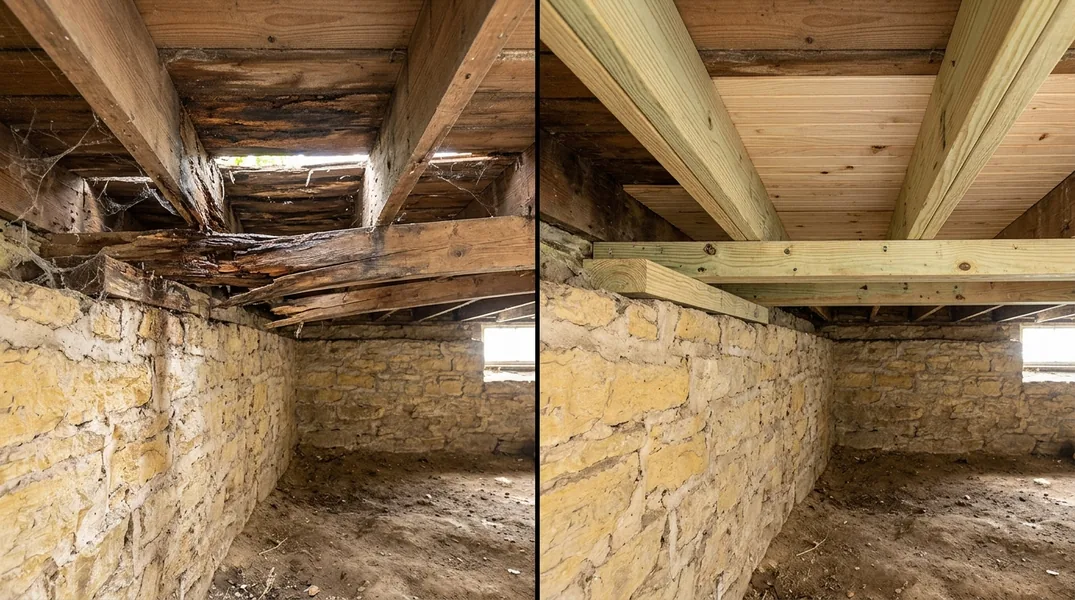
Another major cause is Wood Rot & Dry Rot Repair in the structural members beneath your floors. Basements and crawl spaces in older homes are prone to moisture intrusion, which creates the perfect environment for wood-destroying fungi. When floor joists become compromised by rot, they lose their structural integrity and can no longer support the weight above them. This is especially common in homes built before modern moisture barriers and ventilation standards were implemented.
Clay Soil, Basements, and Foundation Problems
The geology beneath your home plays a critical role in floor stability. Joliet and the surrounding region are built on glacial clay deposits that have unique engineering challenges. Clay soil is expansive, meaning it absorbs water and swells significantly, then shrinks as it dries. This constant movement puts tremendous stress on foundation walls and support columns in basements.
Many older homes in the area were built with basements that lack proper drainage, waterproofing, or interior moisture management. Water seeps through foundation cracks, collects around support posts, and creates humid conditions that promote wood decay. Over time, the wood structural elements in the basement, including the support columns, beams, and floor joists, become saturated and begin to rot. When these members weaken, the floor above settles unevenly, creating the characteristic sag or bounce you feel when walking across certain sections of the floor.
Foundation settlement combined with wood damage creates a compounding problem. The foundation shifts due to soil movement, placing abnormal stress on already-weakened wood members. This accelerates deterioration and makes the sagging more pronounced. If left unchecked, this cycle can lead to serious structural failure and costly emergency repairs.
Floor Joist Repair and Sistering: What You Need to Know
Floor Joist & Subfloor Repair is often the most direct solution to sagging floors caused by damaged or undersized joists. Understanding the repair process helps you make informed decisions about your home's future.
Sistering floor joists is a proven method used by professional carpenters to restore structural support without requiring complete joist replacement. This technique involves installing a new, pressure-treated or solid-sawn joist alongside the existing damaged or weakened joist, fastening them together with bolts and nails to create a doubled member. The new sister joist shares the load with the existing joist, effectively doubling the structural capacity of that bay. For homeowners, this means the floor can once again support its intended load, and the sagging typically stops or is significantly reduced.
The success of sistering depends on proper installation and accurate assessment of the underlying cause. If the sagging is due solely to wood rot in the joists, sistering works well. However, if foundation settlement is the primary issue, sistering alone may not fully resolve the problem. A professional inspection is essential to determine whether sistering, foundation repair, beam replacement, or a combination of solutions is necessary. This is why getting a free estimate from an experienced carpenter is the first step toward a lasting fix.
When to Call a Professional for Sagging Floor Repair Near Me
Recognizing when a sagging floor requires professional attention can save you thousands of dollars in future repairs. While minor floor unevenness is common in older homes, certain warning signs demand immediate action from a qualified carpenter or structural specialist.
You should contact a professional if you notice visible sagging in the middle of a room, if doors and windows no longer close properly, if you see cracks in basement walls or foundation, if there's visible wood damage or soft spots in joists, or if you detect musty odors indicating moisture and mold. These symptoms point to structural issues that will only worsen over time. Delaying repair allows wood rot to spread, foundations to settle further, and the overall structural integrity of your home to deteriorate.
Joliet Carpentry specializes in diagnosing and repairing sagging floors caused by rot, foundation issues, and damaged joists. Our team can perform a thorough inspection of your basement, crawl space, and floor structure to identify the root cause and recommend the most effective repair strategy. Whether the solution involves sistering joists, Beam Replacement & Load-Bearing Wall Removal, or addressing moisture and foundation problems, we'll guide you through the process. Call us at (815) 768-1960 to schedule your inspection today.
The Repair Process: What to Expect
Understanding the repair timeline and process helps you prepare for the work ahead. Most sagging floor repairs begin with a detailed structural assessment. Our team inspects the basement or crawl space, tests wood samples for rot, checks foundation stability, and evaluates the condition of all structural members. This inspection reveals whether the problem is localized to a few joists or more widespread, and whether additional issues like foundation settlement or moisture intrusion need to be addressed simultaneously.
Once we've identified the problem, we'll discuss repair options and pricing with you. For rot-damaged joists, we may recommend sistering or full joist replacement. For foundation issues, we might suggest additional support columns or beam work. For moisture problems, we'll advise on drainage improvements or ventilation upgrades. Many repairs require temporary support beams to be installed before damaged members are removed or reinforced, ensuring the floor remains stable throughout the work.
The actual repair work typically takes several days to a week, depending on the scope. After repairs are complete, we'll verify that the floor is level, that all connections are secure, and that any moisture or drainage issues have been resolved. Most homeowners notice an immediate improvement in floor feel and stability, with doors and windows functioning normally again.
Preventing Future Sagging: Maintenance and Moisture Control
Once your floors have been repaired, protecting your investment means preventing the conditions that caused the damage in the first place. Moisture management is the single most important factor in preventing future wood rot and foundation problems in basements and crawl spaces.
Ensure your basement or crawl space has adequate drainage and ventilation. Install or upgrade sump pumps if water tends to collect, seal foundation cracks with hydraulic cement, and consider installing interior or exterior drain tile systems if groundwater is a persistent issue. In crawl spaces, install a vapor barrier over the soil to reduce humidity. Make sure gutters and downspouts direct water away from the foundation, and grade the soil around your home to slope away from the house.
Regular inspections are equally important. Schedule annual or bi-annual checks of your basement and crawl space to catch early signs of moisture, wood damage, or foundation movement. If you notice new cracks, soft spots in wood, or musty odors, contact a professional promptly. Early intervention is far less expensive than waiting until sagging becomes severe.
Looking for a professional carpentry contractor in Joliet? Joliet Carpentry responds fast for all your carpentry needs.
Get a Free QuoteOur services: Wood Rot & Dry Rot Repair · Termite Damage Repair · Floor Joist & Subfloor Repair